A lot of clean-energy politics has an aesthetic problem. It looks like a panel discussion in a hotel ballroom. It sounds like a room where every noun has been composted into a framework.
That’s not how people fall in love with technology. People fall in love with a machine when it solves a problem that used to make their life smaller. It makes a job easier. It gets them somewhere they couldn’t go. It keeps the lights on when the neighbors’ are off.
If electrification is going to get out of the culture war, it has to feel less like a moral instruction and more like a good tool.
The Truck That Ran The House
Go back to Texas in February 2021, the week the grid failed.
In Katy, outside Houston, Randy Jones had a new 2021 Ford F-150 hybrid with an optional 7.2-kilowatt generator built in, the kind meant for running power tools on a job site. When the power went out, he ran cords from the truck to keep lights, a space heater, a refrigerator, and the coffee pot going, ten to twelve hours a day, for three days. Out in Kerrville, Jerry Hall, who’d bought his truck a few weeks earlier, did the same. “It would have been three miserable days without the truck,” he told CNBC. Ford ended up asking its Texas dealers to lend out every one of the 415 hybrid F-150s they had in stock.
To be clear, those hybrids were burning gasoline to do it. What made them useful was the electric hardware: the motor-generator, the battery, the inverter, the outlets. Nobody in those stories was making a statement. They had a truck that could make household power, and it turned out to be the most useful thing in the driveway. The all-electric F-150 Lightning took the gas out of it: plugged into a house through Ford’s backup system, its battery could push up to 9.6 kilowatts into the home, which Ford said was enough to run a typical house for about three days, or up to ten with rationing.
The market for electric pickups has been rough. Ford stopped building the all-electric Lightning at the end of 2025 in favor of a version with a gas generator on board. But the lesson from Katy holds up. Give a truck a big battery and an inverter, and it becomes a power plant you can park.
Electric Doesn’t Mean Soft
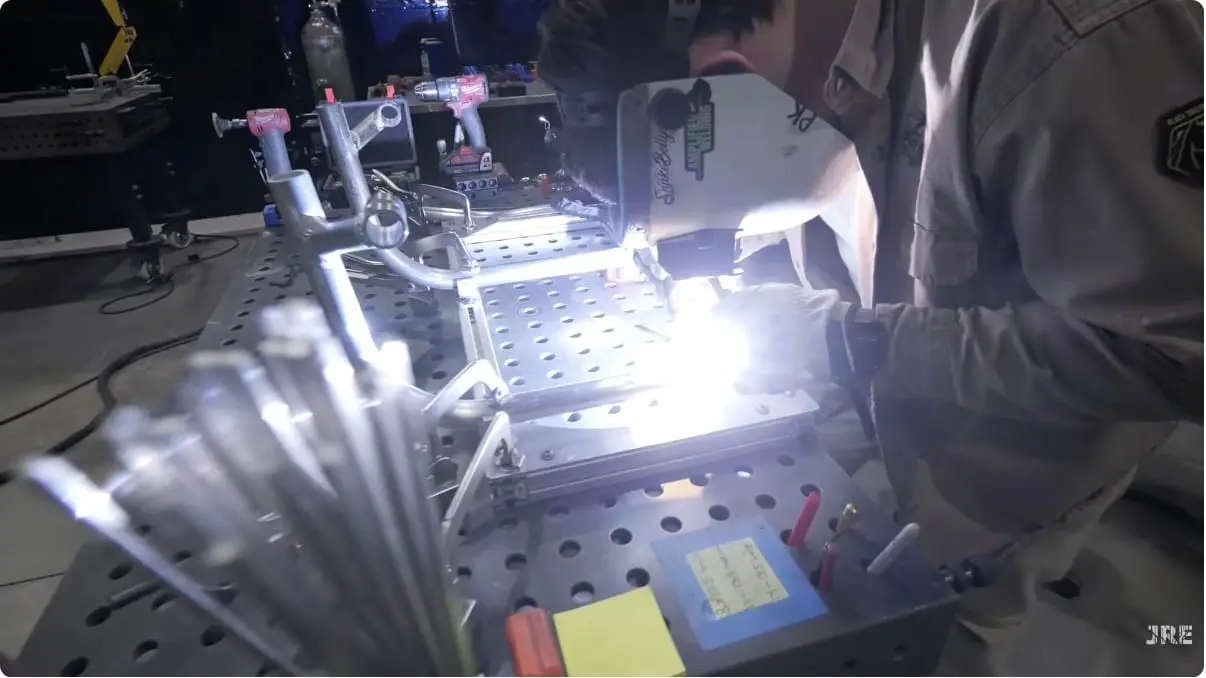
Zack Nelson built a YouTube audience of millions under the name JerryRigEverything by doing violent things to expensive phones: scratching, bending, burning, and tearing them apart to see what’s inside. His whole brand is durability, tools, and metal, about as far from the climate-conference aesthetic as a person can get. He and his wife Cambry, who uses a wheelchair, also started a company called Not A Wheelchair. Its first product, The Rig, launched in 2020: an electric, off-road, all-terrain chair that’s closer to a small quad than to anything in a hospital. In 2026 they opened their own factory to build them.

That’s what electrification looks like when it’s done well: torque, fabrication, welding, and range. A battery can be a freedom device if it lets someone go somewhere they couldn’t go before.
Electricians Aren’t Green
The same goes for the people who build the grid.
We need fewer “green jobs” and more skilled trades. Electricians aren’t green. They’re electricians. Linemen, welders, millwrights, heavy-equipment operators, substation techs, and mechanics don’t need to be turned into mascots for a color. They need steady work, good pay, and training pipelines that can keep up.
The demand is already here. The Bureau of Labor Statistics projects that solar installers and wind turbine technicians will be the second- and fourth-fastest-growing occupations in the country through 2035. They’re small fields, though. The bigger story is electricians, about 820,000 of them today, with roughly 73,000 openings a year projected over the next decade. Microsoft’s president, Brad Smith, has called the shortage of electrical workers the number-one problem slowing the company’s data-center expansion.
Whatever you think about the culture war, the country is about to need a lot of people who know how to pull wire, set transformers, and keep big machines running. Those are good jobs in every county, and none of them require an opinion about polar bears.
Local Power Is Practical Power
There’s a kind of American self-reliance that fossil-fuel culture understands very well: the truck, the shop, the generator, the guy who can fix anything. That culture is worth a lot. The mistake is assuming self-reliance belongs to oil.
A generator isn’t self-reliance if you can’t get fuel for it. A truck isn’t self-reliance if every mile depends on a supply chain that runs through a strait on the other side of the planet. Ask anyone who sat in a gas line, or paid $6.50 for diesel in September 2026.
Electrification can serve self-reliance better because it shortens the fuel chain. Panels on a barn roof. A battery in the garage. A truck that can run the house. A microgrid that keeps a hospital or a fire station running when the main grid goes down. Being prepared doesn’t mean knowing which crisis is coming. It means shortening the distance between you and the things you need before the bad week arrives.
The builder ethos cuts through the culture war with one plain question: does the tool give people more capability?
If it does, build it. If it doesn’t, don’t.